The One Coaching Skill That Changes Everything
Phil Green
March 9, 2025
Ask any athlete to think back on the coach who made the biggest difference in their life. Chances are...

There's a quality all great coaches share and it has nothing to do with tactics.
Ask any athlete to think back on the coach who made the biggest difference in their life. Chances are, it wasn't the one who ran the sharpest drills or had the most detailed game plan. It was the one who listened. The one who asked a question that stuck with you long after the whistle blew.
The best coaches aren't just teachers. They're curious. And that curiosity expressed through the right question at the right moment can change the course of a young person's sporting life.
Research in sport psychology has long shown that athletes who are encouraged to reflect on their own experiences develop stronger self-awareness, better emotional regulation, and greater intrinsic motivation. In other words: they want to play, they understand themselves, and they bounce back faster when things go wrong.
But here's the challenge most coaches face knowing what to ask.
When time is short, when the pressure is on, and when you're managing a squad of twelve-year-olds who'd rather be on their phones, finding the words to spark a meaningful conversation can feel like the last thing on your list.
That's exactly the gap SportMinds was created to fill.
Think about the conversations that happen after most training sessions or matches. A quick debrief. A few points on what went well, what didn't. Then everyone heads home.
Now think about what gets left unsaid.
How did Jake feel when he missed that penalty? Is Mia losing confidence because she's being compared to her older sister? Does Tom even know why he keeps switching off in the second half?
These aren't problems tactics can solve. They're conversations waiting to happen.
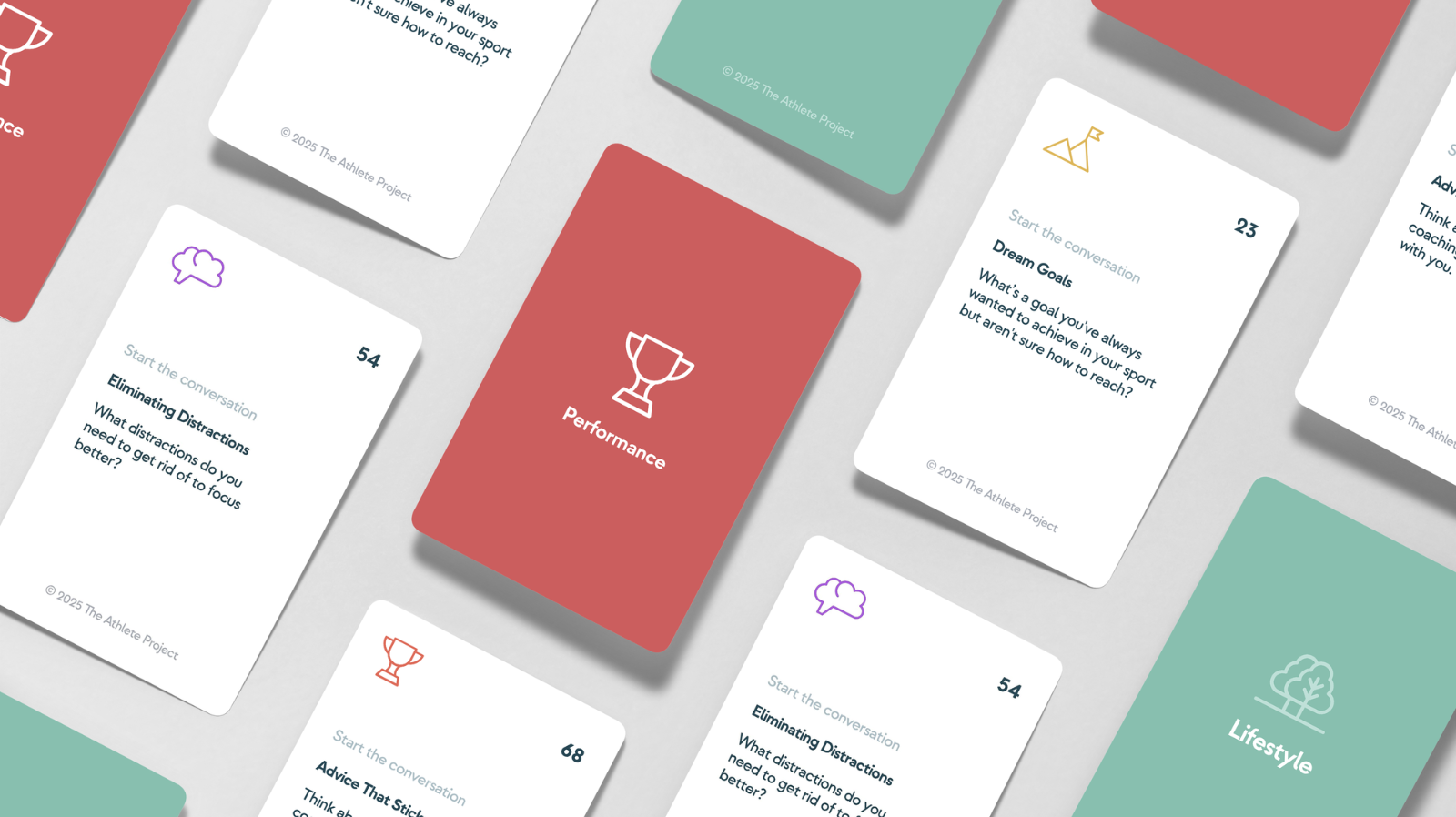
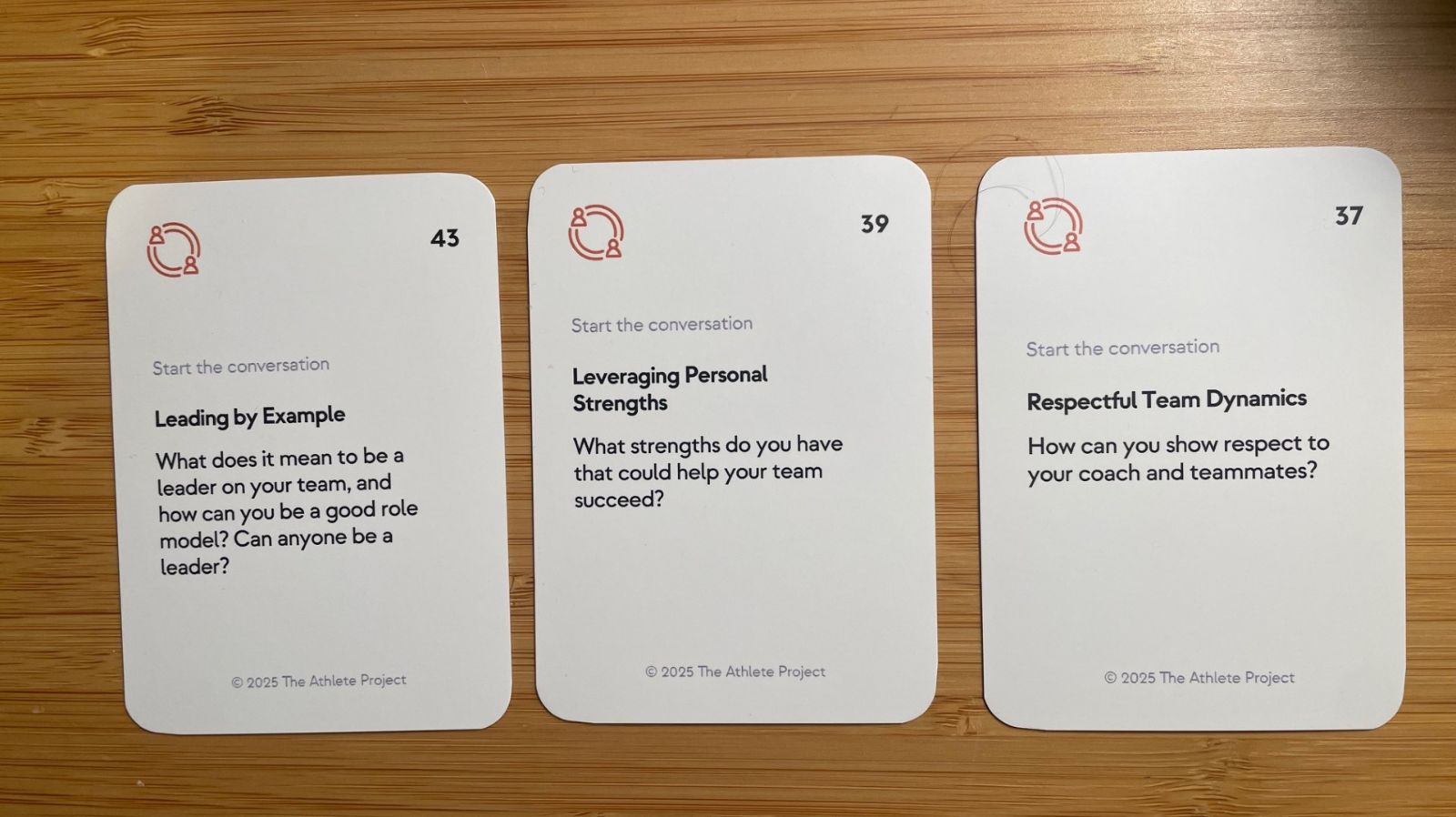
The six themes in the SportMinds All Sports Deck: Mindset, Ambition, Performance, Teamwork, Communication, and Lifestyle are built around exactly these kinds of moments. Each card is a prompt. A way in. A way of saying: I see you as a whole person, not just a player.
Here's what coaches who have used SportMinds consistently report:
🗣 Athletes open up. When the question comes from a card rather than a coach, it removes the pressure. Young people feel invited into the conversation rather than put on the spot.
💪 Confidence grows. Athletes who can articulate their own strengths and growth areas develop a clearer sense of identity both in sport and in life.
🤝 Teams become teams. Some of the most powerful SportMinds conversations happen in groups. When players hear their teammates talk about setbacks, doubts, and ambitions, something shifts. Empathy builds. Trust deepens.
🎯 Performance follows. Not the other way around. Coaches who invest time in the mental and emotional side of their athletes' development report improvements in focus, communication, and effort on the field not despite spending less time on tactics, but because of the groundwork those conversations lay.
One of the things that makes SportMinds unique is its flexibility. It works just as well in:
There's no wrong way to use them. There's just the next conversation waiting to happen.
If you're reading this, you probably already believe that sport is about more than winning. You got into coaching because you wanted to make a difference — not just to results, but to people.
So here's one question worth sitting with:
When was the last time you had a conversation with one of your athletes that had nothing to do with their performance?
If the answer surprises you, that's not a criticism. It's an opportunity.
SportMinds exists to help coaches like you turn the intention to connect into the habit of connecting one conversation at a time.